48 Minutes Later: Twice the Tests and a Reviewer Better Than Me
A complete course for developers who are serious about making AI part of how they actually work.
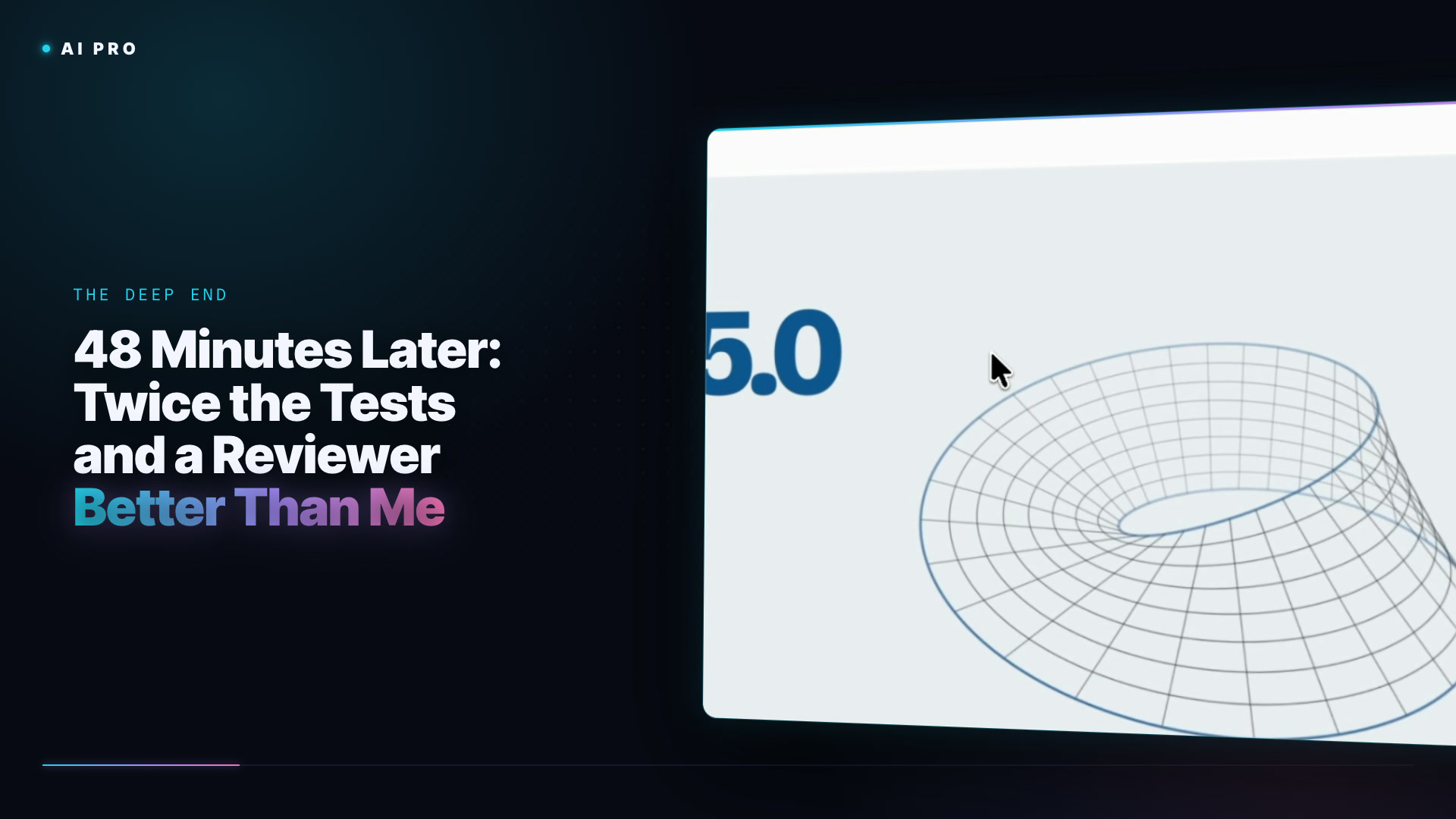
48 minutes and seven seconds later, Moebius runs on epgsql 4.8 with Pooler, the test suite has doubled (100 new tests), there's a changelog, the version is 5.0, and the surprise is support for Postgres' COPY protocol: 100,000 rows in 130 milliseconds. It also made an artifact, a private shareable page with benchmark charts and a groovy SVG, which you might call a waste of tokens. I don't, because it's a beautiful summary of what just happened, and the "why does Moebius exist" section is going straight into the readme. The part I'm happiest about is the skills it added: handcuffs for Claude that make it do Elixir testing, OTP and Postgres the way they should be done. Those skills help me write better code than I would on my own.
I check usage before the last step. This big lift shows as $16.47, which is representative rather than exact because I'm on the 20X Claude Max plan; I run Claude all day and night and have never hit the wall. The context window is nearly full, so I clear it and dictate the readme prompt.
I want to push this live because this looks great, but before I do so, let's make sure that readme is nice and tight. I want to look like a champion. Add some other GitHub documents such as a contributor.md. Make sure that we have the proper license in here, which it looks like we do. Add a blurb as to why Moebius exists and the niche it's supposed to fill, which is that this is open source, and the developers of the language don't necessarily have to also do the tooling. Say it politely and say it kindly. Also discuss the driver change and why we revved to 5.0. Talk about the things that you put in the artifact. I like it. Make sure that there are comprehensive examples on that readme. When you're done, go ahead and commit everything and push.
While that runs I open a second tab with my YOLO alias (bypass permissions on), switch the model to Fable 5.1, the smartest model I can use today, and ask for an independent review against the skills and the code map. This is what AI development looks like: three, four, five sessions going at once, bouncing between tabs.
I want you to run an independent code review and make sure that the code here in this library and the tests as written adhere to the skills that we have in the .claude directory, specifically the Elixir testing, the Erlang, OTP, Postgres, and so on. What I want to do is to make sure that there are no ridiculous bugs. I want to make sure that the formatting is idiomatic. If there's anything in here I need to be concerned about as the open source maintainer. It means a lot to me to turn out safe, secure, good looking, and solid code. So take your time. Go through it. There's also a code map in here. Make sure you use that as well.
The readme comes back with Hex and Elixir badges, a kind paragraph about why the library exists (the people who build the language also build Ecto and Postgrex, and both are excellent), the reasons for the driver change, and comprehensive examples. Code of conduct, contributing and security files are in; I bump the MIT license to 2026 and hand it to Chase Pursley. No, I'm not reading every line, because Opus 5.5 gets me 90% of what I want and anyone who hits a bad example can tell me. Then the review lands: silent data corruption when rows have different key orders, a malformed UUID crashing the connection, limit and offset producing invalid SQL, five bugs in all, plus notes on JSON keys becoming atoms (my old choice) and hand-matched epgsql records. That is a better review than I would ever have done, and I have it fix the bugs with regression tests and push. You can review it yourself instead; it just makes you the bottleneck.
A complete course for developers who are serious about making AI part of how they actually work.