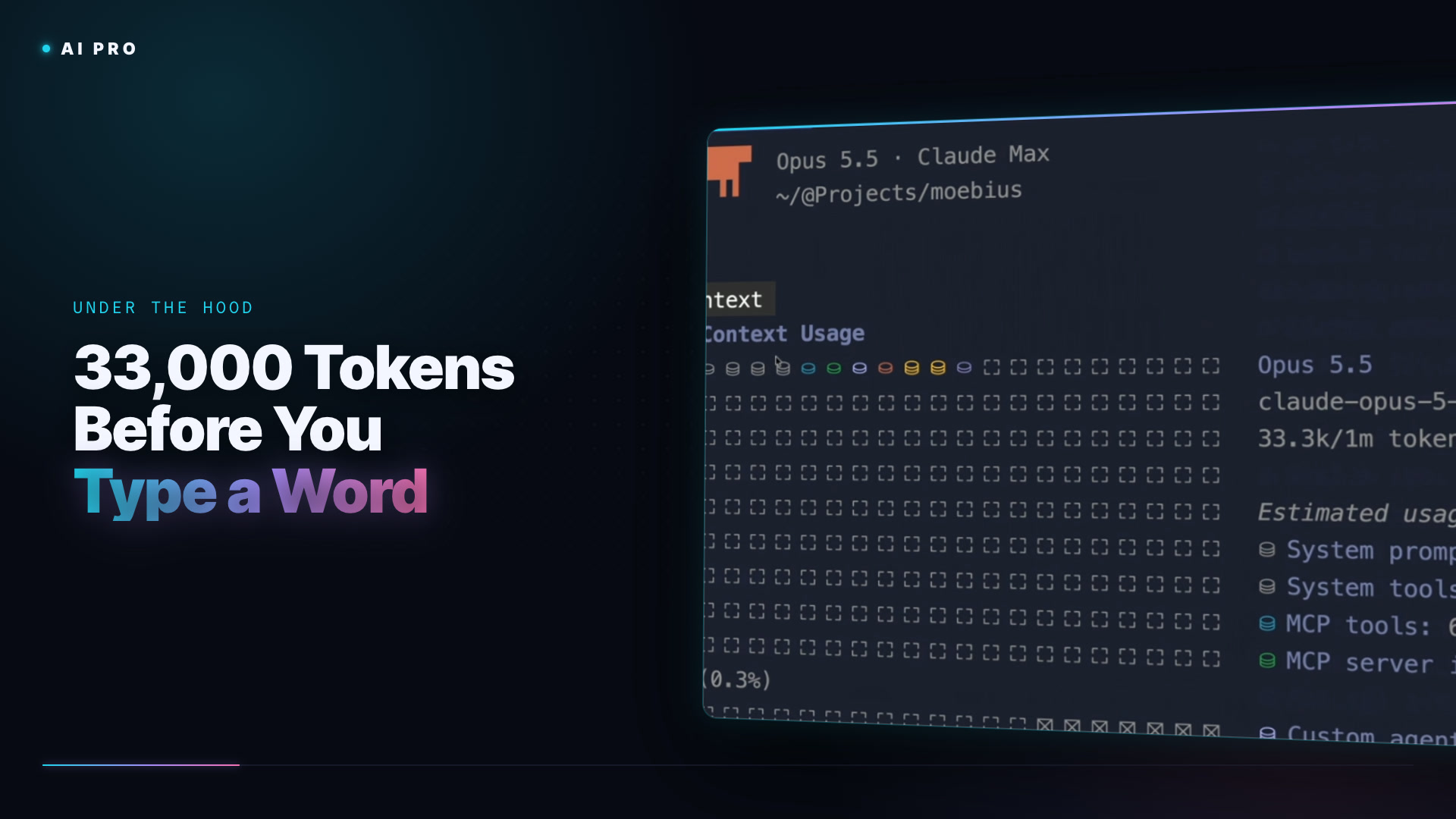
33,000 Tokens Before You Type a Word
A complete course for developers who are serious about making AI part of how they actually work.
People talk about models like they're the whole story. I use Opus, it's great. I use Fable, it's great. What gets lost is that the tooling dictates so much. The Claude Code team ships every few days, and it isn't just the interface that changes. They tweak the system prompt and everything else that goes into working with Claude, and all of that sits between you and the model.
So we start in the Claude CLI. I show you the alias I use to skip permissions (and why so many people run it that way: otherwise you sit there saying "yes, fine" all day), then claude -p, which runs a prompt and prints the result. That one matters more than it looks, because a lot of tools that say they "use Claude" are just piping your prompt into it.
Then we go under the hood. In a fresh session /context shows about 33,000 tokens already spent before I've typed a thing: a proprietary system prompt that tells the model "you are Claude Code", and 15,000 or so tokens of tool definitions for read, write, grep, bash and the MCP servers you've hooked up. It's all text, basically Markdown, and the work you do sits on top of that mountain. /usage shows what a session costs and how close you are to your plan limits. I've come close once with Fable, and I was going to bed anyway.
Last, a quick look at the desktop app, which is really a glorified wrapper around the CLI: the context panel, files in preview, the code toggle, and running a session in the cloud.
The alias I start Claude Code with:
yolo
What the alias runs:
claude --dangerously-skip-permissions
Sending a single prompt with -p (print):
claude -p "what time is the world cup on next" --dangerously-skip-permissions
What's already loaded into your context:
/context
What the session costs, and where you are against your limits:
/usage
A complete course for developers who are serious about making AI part of how they actually work.